
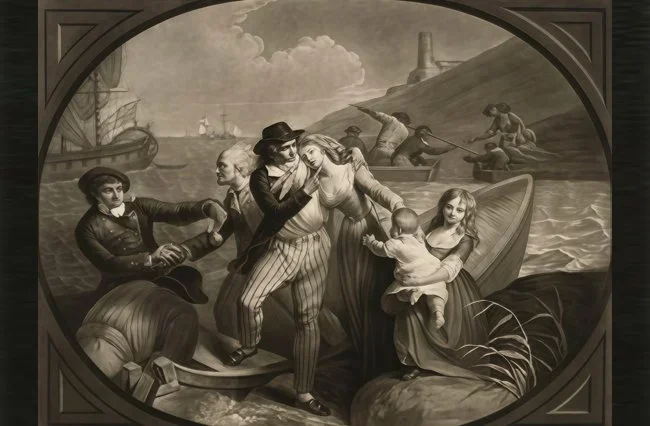
Seafarers embodied intangible values such as bravery, stoicism, and loyalty at a time when the prevailing military ideals condemned any display of vulnerability or excessive sensitivity, fostering an environment rife with homophobia. However, in poetic expressions, sailors were often depicted as weeping upon departing or returning home, facing battle, or confronting death.
Abney Park speaks of this world of bravery starkly through two brothers, both claimed by the sea within six years of one another, their bodies never recovered: "The sea shall give up its dead. Sacred to the memory of Henry Orfeur, lost with all the crew, by the wreck of the schooner Invoice, in the Bristol Channel, Nov. 23, 1856, aged 23 years. Also John his brother, of the barque Geraldine, last heard of April 14, 1862, near the equator, aged 17 years”
This talk explores the folk narrative of the departing Jack Tar, the epitome of manhood for the whole nation during the Georgian and Victorian era. This portrayal of the sailor-hero from the working class provides insights into the ideals of manliness prevalent in the long eighteenth century, offering a lens into the societal perceptions of men and emotional sensitivity.
For more information: Please visit https://abneypark.org/upcoming-events/2026/8/31/the-departing-sailor-the-sailors-tear-and-the-emotional-jack-tar to buy tickets for this event.